
How to Open a Restaurant in Canada (Step-by-Step Guide for 2026)
What does it really take to open a successful restaurant in Canada? This guide breaks down the biggest mistakes operators make and what to plan before opening day.
Most restaurants do not fail because of bad food. They fail because the business was not planned properly.
Opening a restaurant in Canada involves more than a strong concept. Permits, costs, location, and execution all need to align early, or problems show up fast.
Many of the same restaurant problems and solutions operators deal with later actually begin during the planning stage. That is where most operators get caught off guard.
Too many start with the idea and figure out the details later. The ones who succeed do the opposite. They plan the business first, before committing serious time or capital.
The margin for error is smaller than it used to be. Around 44% of restaurants are operating at a loss or breaking even in 2026, which means early decisions carry more weight than ever.
The process itself is manageable. The order is what matters.
This guide walks through how to open a restaurant in Canada step by step, so you can avoid costly mistakes and build something that works from day one.
It starts with the decision most people underestimate: the restaurant business plan.
Define Your Concept and Brand First (Everything Depends on This)
Most restaurants do not struggle because of execution. They struggle because the concept was never clear to begin with.
Strong restaurant concept development creates clarity around positioning, pricing, service style, and guest experience.
Many operators jump straight into locations, hiring, or design. That approach creates problems later. A weak concept leads to poor positioning, confused customers, and inconsistent decisions across the business.
In today’s market, that risk is higher. Canada is projected to lose ~4,000 restaurants in 2026, and operators with unfocused concepts are among the most vulnerable.
Start with clarity.
Your concept is not just cuisine. It defines your customer, your pricing, your service style, and the experience you deliver. Your brand is how that concept shows up to the guest, from your name and visuals to how your team communicates and how the space feels.
This is what drives decisions before a guest ever walks in. Around 41% of customers check social media before choosing a restaurant, and 55% choose based on perceived experience and atmosphere.
If your concept and brand are not clear, nothing else will align.
Keep it practical and focused:
Define your target guest and what they value
Clarify what makes you different in your market
Build a consistent brand across menu, space, and communication
Avoid trying to appeal to everyone. That creates complexity, weak positioning, and higher costs.
When your concept is clear, your decisions become easier and more consistent across the business.
Once that foundation is in place, the next step is choosing the right model to execute it.
Choose the Right Restaurant Model (Before You Commit Capital)
Most mistakes happen when the model does not match the concept.
At this stage, the concept is already defined. The focus now is how you bring it to life. Whether you open independently, buy an existing restaurant, or operate a franchise will affect your costs, risk level, and flexibility.
Each model comes with trade-offs:
Independent: full control, higher risk, greater operational responsibility
Acquisition: existing infrastructure and customer base, but limited flexibility and potential inherited problems
Franchise: proven systems and brand recognition, but less creative control and ongoing franchise fees
The goal is alignment.
Your model needs to support your concept (offering + experience), your budget, and your operational capabilities. A strong idea can still fail if the structure behind it is wrong.
This is not about creativity. It is about execution.
Once your model is clear, the next step is testing whether it works in the market you plan to enter.
Validate the Market and Location (Before You Commit)
A strong concept can still fail if it’s in the wrong place.
Location is not just about visibility. It is about demand, pricing, and whether your model fits the area. High foot traffic does not guarantee sales if the audience does not match your concept.
Start with the basics.
Who is already in the market?
What are they charging?
Where are the gaps?
If you cannot clearly answer why customers would choose you over nearby options, the location is already a risk.
Then check the details most people overlook. Landlord vision, zoning, parking, alcohol permissions, and operating hours can all affect whether a space actually works for your concept. A unit that looks perfect can still fail on compliance or restrictions.
Do not assume a former restaurant space is ready to go. Requirements change, and approvals or accessibility updates can still be needed.
If you want a simple test, ask one question before committing: does this location support your concept operationally and financially, not just visually?
Once the market and location make sense, you can move forward with confidence. The next step is understanding what it will actually cost to open and stay open.
Build a Realistic Budget (Startup + Survival)
Most budgets fail because they only cover opening day.
The real risk is what happens after. Rent, labour, inventory, and early inefficiencies can drain cash fast if you are not prepared.
Startup costs in Canada typically range from $250,000 to $1M+, depending on concept and location. The bigger mistake is underestimating how much cash you need to operate in the first few months.
| Cost Area | What It Covers |
|---|---|
| Build-out | Construction, design, renovations, signage, fixtures & furniture |
| Collateral | Takeout packaging, merch, staff uniforms, menu boards or backers |
| Equipment | Kitchen, POS, smallwares |
| Inventory | Initial food and supplies - the food and beverage you’re buying for prep and training before you make your first dollar |
| Management Pre-Opening Labour | Salaried staff who start 8-12 weeks before the doors open |
| Professional Fees | Lawyers, interior designers, brand designers, engineers, marketing |
| Permits & fees | Licenses and approvals |
| Rent & deposits | First months + security |
| Working capital | 3 months of operating cushion |
Working capital is where most plans fall short. It often requires 30 to 40 percent of your total budget, and without it, even a strong opening can stall.
The goal is not just to open. It is to stay stable long enough to improve.
Once your numbers are clear, the next challenge is timing. And that is where permits and approvals can slow everything down.
Licenses, Permits, and Approvals (Where Delays Happen)
As many openings get delayed here as in construction.
Permits take time, and starting late can push your opening back by weeks or months. Requirements also vary by province and city, so assuming a standard process is a mistake.
At minimum, expect to handle:
Business registration and tax setup
Municipal business licence
Health or food premises permit
Fire and occupancy approvals
Liquor licence if you plan to serve alcohol
The key issue is timing.
Health authorities often need to approve your kitchen layout before construction begins, and changes later can trigger re-approvals and delays. Liquor licences can also take months depending on the location and application, and in some provinces, will affect what products and pricing you receive.
Start early and run approvals in parallel with your build-out. Waiting until the last minute creates bottlenecks you cannot control.
If you want to move faster, treat permits as part of your opening strategy, not a checklist at the end.
Once approvals are in motion, the next decision has a direct impact on both cost and efficiency.
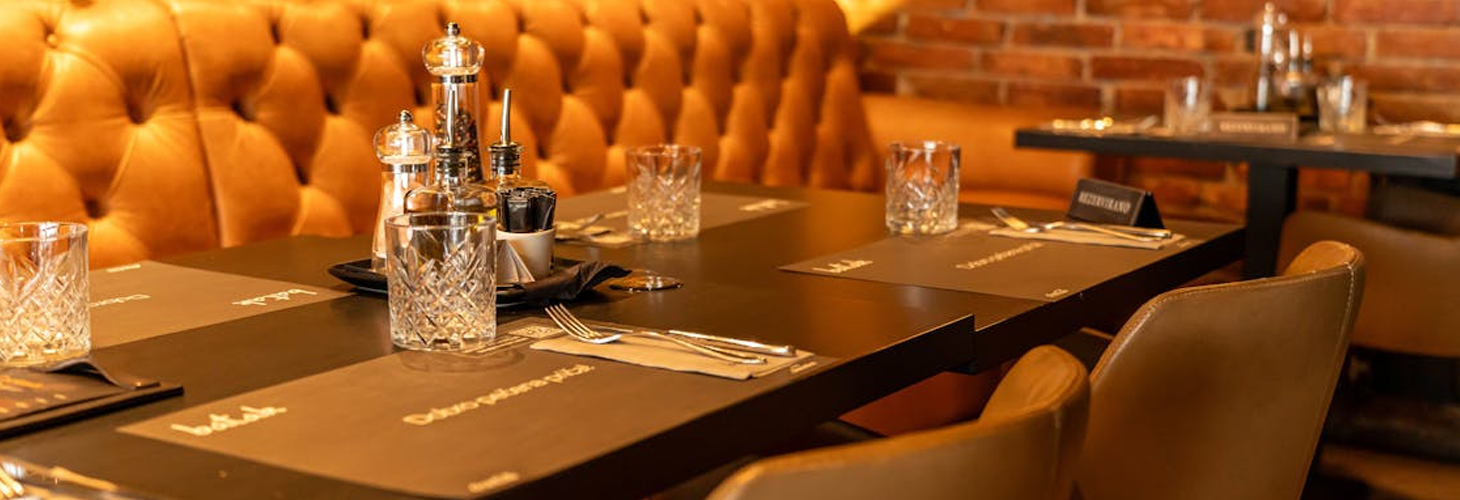
Opening a new restaurant has a lot of challenges, but the operators who plan properly, control costs, and build strong systems give themselves the best chance to succeed.
Build Your Restaurant the Right Way →
Design the Space Around Your Menu (Not the Other Way Around)
Most operators design the space first and try to fit the menu into it later. That usually creates inefficiencies you deal with every day.
Your kitchen layout should be driven by what you plan to serve. Equipment, prep areas, and station flow all depend on your menu. If they are misaligned, service slows down, costs increase, and your team works harder than necessary.
There is also a compliance side to this.
Health authorities often require kitchen plans to be approved before construction begins, and changing the menu afterward can trigger delays or redesigns.
Keep it practical. Design for how the kitchen will operate during peak hours, not how it looks on paper. Focus on flow, speed, and simplicity. Don’t rely on kitchen equipment suppliers to design your kitchen — in our experience, this leads to much higher customization and increased cost as a result.
If you get this right early, you avoid costly adjustments later.
With the space aligned to your menu, the next step is making sure the menu itself works from both an operational and financial standpoint.
Build a Menu That Works (Not Just One That Looks Good)
A creative menu does not guarantee a profitable one.
If it slows down your kitchen, complicates prep, introduces one-off ingredients, or relies on low-margin items, it will create problems from day one. The goal is not variety. The goal is control.
That matters even more in today’s market. Restaurants Canada reported that 71% of operators experienced declining profitability in early 2026, with rising food and labour costs remaining two of the biggest operational pressures facing the industry.
Start with what your operation can execute consistently. Every item should fit your kitchen setup, your team’s skill level, and your expected volume. If it does not, it will break down under pressure.
Strong menu engineering looks at both popularity and profitability, not just food cost percentages. The best-performing menu items are usually the ones that generate strong margins, use overlapping ingredients, move consistently, and can be executed efficiently during busy service periods.
Then look at margin and efficiency together:
Does this item generate strong profit?
Will guests perceive the value behind the price, ingredients, or portion size?
Can it be prepared quickly during peak hours?
Does it share ingredients with other menu items?
Is it popular enough to justify the operational complexity it creates?
If the answer is no, it needs to be reconsidered.
In many cases, removing or simplifying weak-performing menu items improves kitchen flow, consistency, and profitability faster than adding new dishes ever will.
Keep the menu focused. Fewer, well-executed items will outperform a large menu that creates complexity and inconsistency.
When the menu works operationally, your kitchen runs smoother, service improves, and costs stay under control.
Now the focus shifts to the people who will execute it every day.
Hire, Train, and Certify Your Team
Staffing problems do not start after opening. They start before training is complete.
If roles are unclear or training is rushed, service becomes inconsistent from day one. Fixing that later is harder than getting it right early.
Start with structure. Define roles clearly and hire with your operating model in mind, not just availability. A strong team is built on clarity and consistency, not last-minute decisions.
Training is where most gaps show up. Do not rely on shadowing alone.
Strong restaurant service training should establish clear standards for service, food handling, communication, and guest experience so every shift runs consistently.
There is also a compliance layer you cannot ignore. Food safety certification is required across Canada, and alcohol service requires separate certification — like Smart Serve in Ontario or Serving It Right in BC — depending on the province.
Keep it simple and focused:
Train for consistency, not just speed
Introduce checklists that create accountability
Cross-train to handle peak periods
Set expectations early and reinforce them daily
If you want one priority, make sure your team knows exactly what “good” looks like before you open.
Once your people are ready, the next step is giving them systems that allow them to execute without friction.
Set Up Systems Before Opening Day
Opening without systems creates problems you cannot fix on the fly.
Orders get lost, inventory drifts, schedules break down, and small issues turn into daily friction. Even a strong team struggles without structure behind it.
Set up the basics before you open:
POS system for orders and reporting
Inventory tracking to control food cost
Recipes for portion control and prep/presentation standards
Scheduling tools to manage labour
Simple SOPs for key tasks and workflows
Keep it practical. You do not need complex software, but you do need consistency. Your team should know how things are done without guessing.
If you want one priority, build a simple weekly dashboard that tracks:
Food cost
Labour cost
Sales
These numbers tell you early when something is off.
When systems are in place, your operation runs with control instead of reaction. That is what allows you to improve instead of constantly fixing problems.
With everything set up, the final step is how you open.
Launch the Right Way (Not the Fast Way)
A rushed opening creates problems you carry for months. We’ve seen it before with countless operators. When the finish line is close, it’s tempting to just open doors and start making some (any) money.
When systems, staff, and workflow are not fully tested, mistakes show up immediately. Service slips, reviews suffer, and first impressions are hard to recover from.
Start with dry runs.
Keep volume controlled, invite a smaller group of guests - usually friends and family, and treat it as a live test. This is where you identify gaps in service, timing, and execution while the stakes are still low.
Focus on three things:
Service flow and timing
Kitchen consistency
Team coordination
Fix issues quickly, then scale.
A measured launch gives you time to adjust before exposing your operation to full demand and higher expectations. It is not about delaying opening, it is about opening with control.
Once you go live properly, the goal shifts from opening successfully to staying profitable.
Opening Is Step One. Staying Profitable Is the Real Goal
Opening a restaurant in Canada is not the hard part. Staying profitable is.
The difference comes down to decisions made before you open. Concept, location, costs, permits, systems, and training all compound over time. When they are done right, the operation stabilizes faster and gives you room to improve. When they are rushed or overlooked, problems show up early and are harder to fix.
The operators who succeed are not guessing. They follow a clear process, control their costs, and build systems that hold under pressure.
That is what gives you a real chance to grow.
Planning to Open a Restaurant in Canada?
Opening a restaurant is not just about the idea. It is about building an operation that can survive real-world pressure.
At The Fifteen Group, we help operators navigate the full process of opening and scaling restaurants across Canada — from restaurant concept development and business planning to kitchen design, menu development, operations, and launch strategy.
Whether you are:
Opening your first restaurant
Expanding into a second location
Building a restaurant inside a hotel or mixed-use development
Fixing operational issues before launch
Our restaurant consulting services are designed to help you avoid costly mistakes and build a stronger foundation from day one.
Frequently Asked Questions
-
Startup costs typically range from $250,000 to $1M+, depending on size, concept, and location.
-
Most openings take 6 to 18 months, depending on bank loans, permits, construction, and approvals.
-
You will need business registration, a municipal licence, health permits, and possibly a liquor licence depending on your concept. Requirements vary by province and city.
-
The biggest mistake new restaurant owners make is underestimating how difficult and operationally demanding the business really is.
Many focus heavily on the food or concept while neglecting the systems that actually keep a restaurant profitable: financial planning, labour control, restaurant menu engineering, kitchen flow, training, inventory management, and working capital. They often open too quickly, overspend on build-outs, or assume customers will come automatically without a clear positioning and operational strategy.
A restaurant can survive imperfect food longer than it can survive weak operations and poor cash flow.