
Why Is My Restaurant Not Making Money? The 8 Most Common Reasons

Why is your restaurant not making money? This guide breaks down the biggest profitability problems restaurants face and how to improve margins, control costs, and operate more sustainably.
If you’re wondering why your restaurant is not making money, you are not alone.
Many restaurants look busy on the surface but still struggle financially behind the scenes. Full dining rooms do not automatically translate into strong profits. In many cases, restaurants generate healthy sales while quietly losing money through rising food costs, labor pressure, waste, rent, delivery fees, and operational inefficiencies.
The pressure has become even more intense in recent years. In 2025, 42% of restaurant operators said their business was not profitable.
At the same time, one of the biggest myths in the industry continues to spread online: the idea that “90% of restaurants fail in the first year.”
In reality, restaurant survival rates are significantly higher than most people think.
The bigger issue is not usually sudden collapse. Most restaurants lose money gradually.
Weak financial controls, rising prime costs, poor menu engineering, inconsistent operations, and overhead that slowly becomes unsustainable can quietly erode margins over time. A restaurant does not need to be empty to become unprofitable.
In this article, we’ll break down the biggest reasons restaurants lose money in 2026 and what operators can realistically do to fix it before small operational leaks turn into major financial problems.
The Real Problem: Revenue Is Growing Faster Than Profit
One of the biggest misconceptions in the restaurant industry is that higher sales automatically lead to higher profit.
They do not.
Many restaurants increase revenue while simultaneously becoming less profitable. Costs rise quietly in the background while operators focus primarily on traffic and sales volume. Food inflation, labor costs, utilities, insurance, rent, delivery app commissions, and payment processing fees all continue cutting deeper into margins.
That is why many restaurants can feel busy while still struggling financially.
Average restaurant profit margins remain extremely thin, often around just 3–5%. Full-service restaurants often operate even lower, with median pre-tax income sitting near 2.8% of sales.
The pressure becomes even worse when restaurants try absorbing inflation instead of adjusting pricing, operations, or menu strategy. Small inefficiencies that once seemed manageable suddenly become major financial leaks.
A few extra labor hours every day.
Slight over-portioning.
High-waste ingredients.
Low-margin menu items.
Slow table turnover.
Delivery app fees.
Individually, these issues may not seem catastrophic. Combined, they quietly destroy profitability over time.
This is why successful restaurant operators obsess over margins, systems, and operational efficiency, not just sales volume. Revenue matters, but controlling what happens after the sale matters even more.
1. Your Prime Costs Are Too High
For most restaurants, profitability problems usually start with prime costs.
Prime cost refers to your combined food, beverage, and labor expenses. It is one of the most important numbers in the restaurant industry because these costs move the fastest and have the biggest impact on your margins.
Industry benchmarks typically place food costs around 28–35% of sales. Labor costs for full-service restaurants have also climbed significantly, reaching roughly 36.5% of sales.
Combined, prime costs should ideally stay within the 55–65% range. Once restaurants consistently move above that threshold, profitability becomes extremely difficult.
This is where many operators get trapped.
Sales may look healthy, but food and labor expenses quietly consume nearly everything coming in. A restaurant can technically be “busy” while generating very little actual profit.
Food inflation has made this even harder in recent years. Ingredient costs continue fluctuating, supplier pricing changes frequently, and many restaurants hesitate to raise menu prices aggressively because they fear losing customers. At the same time, labor costs remain elevated as operators compete for reliable staff in a high-turnover industry.
Small inefficiencies also compound quickly.
Over-portioning by a few ounces per plate.
Scheduling too many staff during slow periods.
Waste from oversized menus.
Poor inventory tracking.
Low-margin menu items that sell frequently but contribute little profit.
None of these issues alone usually destroy a restaurant. Together, they slowly erode margins every single week.
This is why successful operators constantly monitor food cost percentages, labor scheduling, menu profitability, and inventory performance. Restaurants that consistently protect their prime costs usually give themselves the best chance of long-term profitability.
Prime Cost Benchmarks (2026)
| Cost Category | Healthy Range | Danger Zone | Source |
|---|---|---|---|
| Food & Beverage | 28–35% | 38%+ | NRA / Toast |
| Labor (Full-Service) | 30–36.5% | 40%+ | NRA Labor Cost Analysis |
| Prime Cost Total | 55–65% | 70%+ | Toast / Whipplewood |
| Net Profit Margin | 5–10% | Under 3% | Industry benchmarks |
2. You Are Busy, But Your Menu Is Not Profitable
A packed dining room does not automatically mean your menu is making money.
This is one of the biggest operational blind spots in the restaurant industry. Many restaurants focus heavily on sales volume without fully understanding which menu items are actually generating profit. Some dishes may sell extremely well while contributing very little margin once ingredient costs, prep time, labor, and waste are factored in.
That is where restaurant menu engineering becomes critical.
A profitable menu is not just about what customers like. It is about balancing popularity, contribution margin, kitchen efficiency, and operational consistency.
Strong restaurant menu engineering strategies focus on identifying dishes that deliver healthy margins while remaining efficient to execute consistently during service.
Large menus often create more problems than operators realize.
More ingredients increase waste. More prep complexity slows down the kitchen. More low-volume dishes create inventory inefficiencies and inconsistent execution. In many cases, restaurants end up carrying expensive ingredients for menu items that barely sell.
Complex menus also create operational drag during peak hours. Longer ticket times reduce table turnover, increase kitchen pressure, and create inconsistency in food quality. Over time, that affects both profitability and guest retention.
This is why many successful restaurants intentionally simplify their menus.
They focus on dishes that:
Deliver strong margins
Use overlapping ingredients
Move efficiently through the kitchen
Maintain consistency during busy service periods
The goal is not endless variety. The goal is operational control.
Many struggling restaurants already have enough customers. The real issue is that their menu structure, pricing, and kitchen execution are not optimized to turn that traffic into sustainable profit.
3. You Do Not Actually Know Your Numbers
Many restaurant owners track sales closely but struggle to track profitability with the same level of discipline.
That gap creates major problems.
Revenue can create a false sense of security. A busy weekend feels productive, but without clear financial visibility, it becomes difficult to understand where money is actually being lost. Restaurants often bleed profit through dozens of small operational leaks that seem minor individually but become expensive over time.
This is one of the biggest findings repeated across restaurant failure studies. Cornell and Parsa’s research on restaurant failure identified poor financial controls, weak management systems, undercapitalization, and operational mismanagement as some of the most common contributors to restaurant struggles.
In many cases, the issue is not a lack of customers. It is a lack of financial visibility.
Restaurants that fail to regularly review their numbers often miss:
Rising vendor costs
waste trends
Shrinking margins
Labor inefficiencies
Inventory variance
Excessive comps and discounts
Delivery app commission erosion
The problem becomes even worse when decisions are made emotionally instead of operationally. Owners may continue pushing unprofitable menu items, overstaffing shifts, or extending weak operating hours simply because they “feel necessary” rather than because the numbers support them.
Successful operators usually approach restaurants differently.
They review key operational metrics consistently. They understand where margins are tightening. They identify leaks early before they become major financial problems.
At minimum, restaurants should regularly track:
Food cost percentage
Labor percentage
Prime cost
Average ticket size
Inventory variance
Waste levels
Delivery commission impact
Daily and weekly sales trends
Without strong financial visibility, restaurants often end up reacting to problems too late. By the time profitability issues become obvious on the surface, margins have usually been deteriorating for months behind the scenes.
4. Your Fixed Costs Are Too High for Your Volume
One of the harshest realities in the restaurant industry is that many costs continue accumulating whether the restaurant is busy or not.
Rent still needs to be paid on slow Tuesdays. Utilities continue running during weak months. Insurance, licenses, software subscriptions, equipment financing, payroll obligations, and debt payments do not pause simply because traffic slows down.
This is where many restaurants become financially trapped.
A restaurant may perform well during peak hours or weekends but still fail to generate enough consistent volume to support its fixed overhead throughout the entire month. Full dining rooms can create the illusion of success while margins remain dangerously thin underneath.
Occupancy costs alone can create major pressure. In Canada and the United States, rent and leasing expenses continue rising across many urban markets, particularly in high-traffic hospitality corridors. Restaurants operating with aggressive lease terms often lose flexibility very quickly once sales soften.
The challenge becomes even worse when operators overestimate sustainable traffic levels before opening. Many restaurants build their cost structure around optimistic projections that become difficult to maintain once real operating conditions set in.
Third-party delivery platforms can quietly intensify the problem as well.
While delivery apps increase exposure and convenience, commission structures can significantly reduce already-thin margins. Restaurants sometimes generate strong delivery sales while making very little actual profit after platform fees, packaging costs, promotions, and labor are factored in.
This is why understanding break-even volume matters so much.
Restaurant owners need to know:
How many covers are required daily
What average ticket size is needed
How much revenue is necessary just to cover fixed costs
Which operating hours are truly profitable
Many restaurants do not necessarily have a sales problem. They have a cost structure problem.
When fixed overhead becomes too heavy relative to consistent customer volume, even busy restaurants can struggle to remain profitable long term.
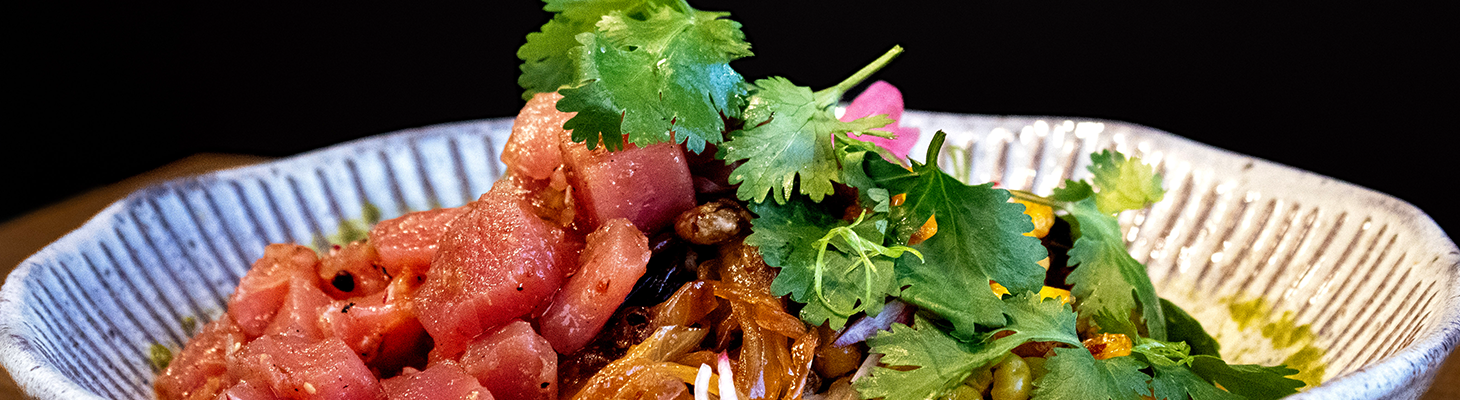
Restaurant profitability rarely improves through dramatic changes overnight. More often, it comes from tighter operations, stronger systems, better cost control, and more consistent execution across every part of the business.
Improve Restaurant Profitability With Stronger Operational Strategy →
5. Your Restaurant Does Not Stand Out Enough
The restaurant industry is one of the most competitive markets in business.
Customers have more options than ever, attention spans are shorter, and loyalty is far weaker than many operators realize. If a restaurant does not clearly stand out, it often becomes interchangeable with dozens of nearby alternatives.
That creates serious pressure on profitability.
Many operators focus heavily on how to increase restaurant traffic, but traffic alone is rarely enough if positioning, retention, and customer loyalty remain weak underneath.
Many struggling restaurants suffer from what operators sometimes call “concept blur.” The food may be decent. The service may be acceptable. The space may look good. But nothing about the experience feels distinct or memorable enough to create strong repeat behavior.
This becomes even more dangerous in saturated markets.
Restaurant failure research from Cornell and Parsa found a strong correlation between restaurant density and operational struggles. In highly competitive areas, weak positioning becomes far more difficult to survive long term.
Generic restaurants usually compete on the worst possible variables:
Discounts
Convenience
Location
Temporary hype
Those advantages rarely hold for long.
The restaurants that perform best over time usually build stronger identity around:
A clear concept
Consistent experience
Recognizable atmosphere
Operational consistency
Community presence
Repeat customer behavior
This does not always require expensive branding or viral marketing.
Sometimes the difference is simply clarity.
A restaurant that knows exactly who it serves, what it does best, and why customers return often performs far better than a restaurant trying to appeal to everyone at once.
Repeat customers matter especially because acquiring new traffic has become significantly more expensive. Restaurants that constantly rely on new customers without building retention usually experience unstable revenue patterns and weaker long-term margins.
Strong restaurants do not just attract attention. They create familiarity, consistency, and reasons for customers to come back regularly.
6. Operational Inconsistency Is Killing Retention
Many restaurants lose customers quietly.
Not because of one terrible experience, but because the overall experience becomes inconsistent over time.
One visit feels great. The next feels average. Service slows down during busy hours. Food quality changes between shifts. Portions fluctuate. Ticket times become unpredictable. Eventually, customers stop returning consistently even if they never leave an angry review.
That inconsistency creates serious long-term damage.
Restaurants depend heavily on repeat business because customer acquisition has become increasingly expensive. If guests only visit once or twice before disappearing, profitability becomes much harder to sustain over time.
Operational inconsistency usually starts internally.
High staff turnover, weak training systems, burnout, communication problems, and poor shift management all create instability during service.
Many restaurants also struggle because processes only exist verbally instead of being documented clearly inside a structured restaurant operations manual.
New staff may execute dishes differently. Managers may enforce standards unevenly. Kitchen pressure during peak hours can cause quality control to collapse very quickly.
The financial impact compounds quietly:
Slower table turnover
More comps and remakes
Weaker online reviews
Lower repeat visit frequency
Declining word-of-mouth referrals
Reduced customer trust
Many operators underestimate how important consistency is to profitability.
Customers do not just return for food. They return for predictability. They want confidence that the experience will feel reliable every time they visit.
This is why many successful restaurants become operationally obsessive.
They standardize recipes.
They build repeatable training systems.
They monitor ticket times.
They simplify execution during rush periods.
They focus heavily on consistency across shifts.
In many cases, operational discipline matters more than creativity.
A restaurant that delivers a consistently strong experience usually outperforms a restaurant that occasionally delivers an exceptional one but struggles with reliability the rest of the time.
7. You Are Reacting Instead of Planning
Many restaurants spend so much time solving daily problems that they never build systems strong enough to prevent those problems from happening again.
That cycle becomes exhausting financially and operationally.
A refrigeration issue appears unexpectedly. Staffing shortages force overtime. Vendor prices increase without warning. Sales dip for a few weeks. Equipment fails during service. Instead of operating strategically, the restaurant constantly shifts into survival mode.
Over time, reactive operations quietly drain profitability.
Restaurant failure research repeatedly points to undercapitalization, weak planning, and poor operational controls as major contributors to long-term financial struggles. Many restaurants do not necessarily collapse because the concept is bad. They struggle because there is very little operational cushion when problems inevitably appear.
This becomes especially dangerous in an industry with such thin margins.
When restaurants operate without forecasting, budgeting, inventory planning, or contingency systems, even relatively small disruptions can create major financial pressure. A single expensive repair, supplier increase, or prolonged slow period can quickly erase weeks of profit.
Strong operators usually approach the business differently.
They build systems before emergencies happen.
They forecast labor needs.
They budget conservatively.
They monitor seasonal trends.
They maintain equipment proactively.
They create cash reserves where possible.
They regularly evaluate profitability by menu category, shift, and operating hour.
Most importantly, they avoid making decisions purely based on short-term emotion.
Restaurants that constantly react to problems often end up chasing symptoms instead of fixing the underlying operational weaknesses causing those problems in the first place.
Long-term profitability usually comes from structure, discipline, and consistency far more than constant improvisation.
How to Quickly Diagnose Why Your Restaurant Is Losing Money
Most restaurant profitability problems become much easier to solve once you identify where the largest financial leak is actually happening.
The mistake many operators make is trying to fix everything at once.
Instead, start with the numbers first. A simple operational audit can usually reveal whether the biggest issue is food cost, labor, overhead, pricing, waste, or weak customer retention.
Here are some common restaurant benchmarks to compare against:
| Area | Healthy Benchmark | Danger Zone |
|---|---|---|
| Food Cost | 28–35% | 38%+ |
| Labor Cost | 25–35% | 40%+ |
| Prime Cost | 55–65% | 70%+ |
| Net Profit Margin | 5–10% | Under 3% |
The goal is not perfection. The goal is visibility.
If your labor cost is climbing every month, that is a signal.
If your food cost suddenly jumps, something changed operationally.
If delivery sales are growing but margins are shrinking, commission structures may be eroding profitability.
If weekends are carrying the entire business, your fixed costs may be too heavy for your weekday volume.
Most restaurants do not fail because of one massive mistake. They lose money through smaller operational leaks that compound over time.
That is why successful operators monitor performance consistently instead of waiting for financial problems to become severe. The earlier you identify margin pressure, the easier it becomes to correct it before profitability deteriorates further.
What to Fix First If Your Restaurant Is Losing Money
If your restaurant is struggling financially, trying to fix everything at once usually creates even more operational chaos.
The better approach is identifying the biggest leak first and correcting it systematically.
For operators searching for how to fix a failing restaurant, the first step is usually identifying where profitability is leaking operationally before making drastic changes.
For most restaurants, the first place to start is prime cost. Food and labor typically have the largest impact on profitability, which means even small improvements can create meaningful financial relief relatively quickly.
Start by reviewing:
Food cost percentages
Labor scheduling
Overtime patterns
Waste levels
Menu profitability
Slow operating hours
Delivery app margins
In many cases, restaurants already have enough traffic. The issue is that too much revenue is being lost operationally before it reaches the bottom line.
Menu simplification is often another high-impact fix. Removing low-margin dishes, reducing ingredient complexity, and tightening kitchen execution can improve both profitability and consistency simultaneously.
Scheduling discipline also matters far more than many operators realize. Overstaffing slower shifts, poor forecasting, and inefficient labor deployment quietly drain margins every single week.
In some cases, outside restaurant consulting services can help operators identify operational inefficiencies, margin leaks, and systems problems that are difficult to spot internally.
After operational leaks are addressed, restaurants can focus more aggressively on retention and growth.
That may include:
Improving repeat customer frequency
Strengthening online reviews
Refining branding and positioning
Improving customer experience consistency
Increasing average ticket size
Building local awareness and loyalty
The key is prioritization.
Profitable restaurants rarely improve through dramatic reinvention overnight. More often, profitability improves through operational discipline, stronger systems, better financial visibility, and consistent execution over time.
Frequently Asked Questions
-
Many restaurants generate strong sales while still struggling financially because revenue alone does not guarantee profit. Rising food costs, labor expenses, rent, delivery app fees, waste, and operational inefficiencies can quietly consume margins behind the scenes.
-
Most restaurants operate on relatively thin margins. Healthy restaurant net profit margins often fall within the 5–10% range, while many restaurants operate lower depending on concept, location, and operating costs.
-
For most restaurants, food and labor are the two largest expenses. Combined, they form prime cost, which is one of the most important profitability metrics in the restaurant industry.
-
Restaurants usually struggle financially because of multiple operational issues compounding over time. Common problems include poor financial controls, rising prime costs, weak menu engineering, excessive overhead, inconsistent operations, and lack of long-term planning.
-
Restaurants typically improve profitability by tightening operational controls, reducing waste, optimizing labor scheduling, improving menu profitability, increasing repeat customers, and monitoring financial performance more consistently.
-
Prime cost refers to the combined total of food, beverage, and labor expenses. It is one of the most important restaurant metrics because it directly affects profitability and day-to-day operational performance.